If you hold space for other people for a living — as a therapist, a doctor, a bodyworker, a teacher, a doula, a manager, a parent leading a household — you already know burnout isn't a rare occupational hazard. It's closer to the default setting. Preventing burnout for practitioners starts with understanding why that's true.
The research bears this out. In the American Psychological Association's 2022 COVID-19 Practitioner Impact Survey, 45% of psychologists reported feeling burned out — consistent with 48% the year before. A 2018 systematic review and meta-analysis spanning 62 studies across 33 countries found a pooled prevalence of 40% for emotional exhaustion among mental health professionals specifically. A 2023 SimplePractice survey of 550 practitioners found more than half currently experiencing burnout, and nearly a third of those were considering leaving the field altogether.
This isn't a piece about willpower or self-care hacks. Preventing burnout for practitioners is structural work — and the research is fairly consistent about what actually helps.
What Burnout Actually Is
Burnout isn't just "being tired." Psychologist Christina Maslach's widely used framework breaks it into three distinct components:
Emotional exhaustion — feeling depleted, unable to give more of yourself
Depersonalization — a growing emotional distance from the people you're supposed to be helping
Reduced sense of accomplishment — the feeling that nothing you do actually makes a difference
All three can show up separately. A practitioner can feel emotionally exhausted while still deeply caring about their clients, or can feel emotionally numb while technically "fine" on paper. This matters because it means burnout doesn't always look like collapse — sometimes it looks like going through the motions.
Why Practitioners Are Especially Vulnerable
Holding space for others is, functionally, emotional labor performed at scale. Practitioners regulate their own nervous systems while simultaneously attuning to someone else's — session after session, client after client, often without anyone doing the same for them.
The 2018 meta-analysis referenced above identified workload and workplace relationships as the primary drivers of burnout among mental health professionals. Separately, research on occupational and physical therapists has found that structural factors — high caseloads, feeling overloaded, dissatisfaction with income, and lack of supervisor support — predict burnout more reliably than any individual trait or coping style.
In other words: practitioners aren't burning out because they're bad at self-care. They're burning out because the systems most of them work inside weren't built to sustain the people doing the holding.
What the Research Says About Preventing Burnout for Practitioners
This is the part that matters most, and it's more specific than "practice self-care." Across the studies above, a consistent set of protective factors shows up:
Regular clinical supervision — the 2018 meta-analysis found this to be one of the most consistent protective factors identified across 33 countries.
Mentorship. A 2023 cross-sectional study of over 2,800 physical therapists in the U.S. found that mentorship and self-efficacy were both independently associated with lower burnout.
Role clarity and professional autonomy — knowing what's actually expected of you, and having some say in how you do the work.
Smaller caseloads and workload flexibility — structural, not personal.
Peer community — not abstractly, but consistent contact with others doing the same kind of work.
Notice what's not on this list: meditation apps, bubble baths, "just say no more." Those aren't wrong, but they're not what the research points to as primary. The research points to structure and relationship — supervision, mentorship, community, workload — not individual coping tricks layered on top of an unsustainable system.
Why This Shapes How The Infinity Container Is Built
This research is part of why The Infinity Container doesn't function as a course you complete alone. We built it as a container precisely because the research on what prevents burnout — consistent supervision-like support, mentorship, peer community, rhythm — can't really be delivered through a solo practice or a one-time workshop.
Inside TIC, that shows up structurally, through four specific pieces built for practitioners:
The Salon — a sharing space, so you're not alone with the work.
Practice space — dedicated time for your own integration, not just facilitating others'.
1:1 office hours — real hand-holding for real problem-solving, not just general community support.
The Lab — freedom to explore genuine ways to optimize your work and keep learning.
The ecosystem holds you and moves with you.
The Solar-Lunar Framework as Burnout Prevention
This is also where the Solar-Lunar Framework itself becomes relevant — not just as a teaching structure, but as burnout prevention in practice. Every integration capacity in the framework exists, in part, to help you digest experience rather than accumulate it. When time and experience get digested rather than stockpiled, you're less likely to be overwhelmed by them — and undigested accumulation, with nowhere for it to go, is a large part of what burnout actually is.
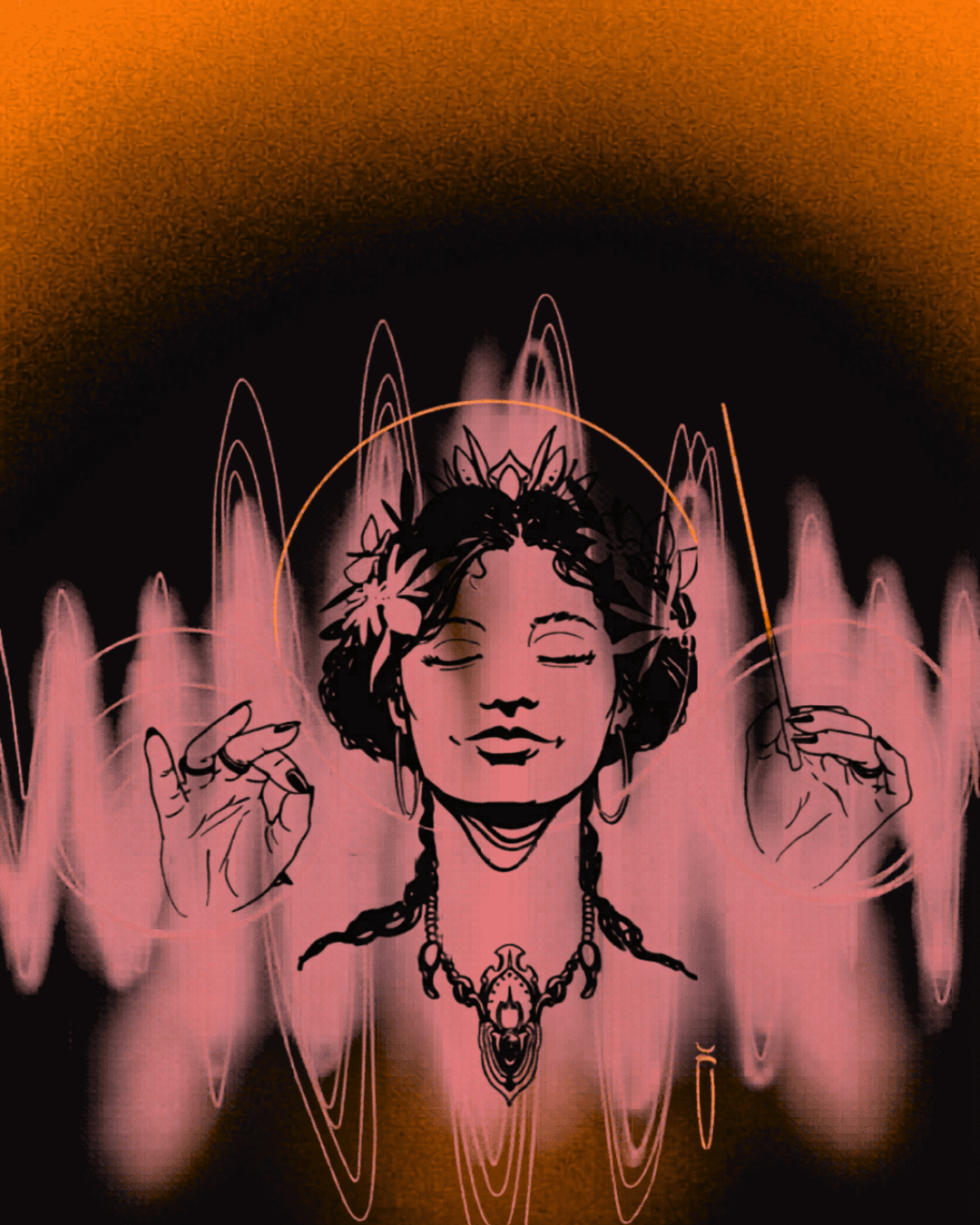
Conducting, one of the thirteen Lunar capacities, speaks to this directly. To conduct is to recognize that you have access to many energies around you — that the work was never meant to be done by pulling entirely from your own internal reserve. Practicing Conducting means learning to draw energy out and through, rather than only from within. That's a different relationship to the work than the one that burns people out. It isn't more effort. It's a different channel.
None of this claims to eliminate burnout. The research doesn't support that promise, and neither will we. What it supports is that consistent structure and real community measurably reduce it — which is the actual design principle behind this container.
Frequently Asked Questions About Practitioner Burnout
What's the difference between burnout and compassion fatigue?
They overlap but aren't identical. Burnout is a broader response to chronic workplace stress — Maslach's three components above. Compassion fatigue is more specific to caregiving roles: the emotional cost of repeated empathic engagement with others' suffering, sometimes called secondary traumatic stress. A practitioner can experience one, both, or either at different times.
Is burnout more common in certain helping professions?
The research shows real variation. Some studies of occupational therapists have found burnout prevalence over 60%; others studying music therapists found much lower rates alongside high risk of predisposition to burnout. Setting, caseload, and supervision structure seem to matter more than the specific profession.
Can burnout be prevented entirely?
No study claims that, and neither do we. The research supports meaningful reduction in risk through structural changes — supervision, mentorship, workload, community — not elimination. Burnout prevention is closer to ongoing maintenance than a one-time fix.
What should I do if I think I'm already burned out?
Start with what the research actually points to: reducing isolation and finding real supervision or mentorship, not just adding another wellness practice on top of an already-full plate. Preventing burnout for practitioners once it's already set in looks less like adding one more habit and more like changing the structure around you. If burnout is affecting your ability to function day to day, that's worth bringing to a licensed therapist directly, not just a community space.
Start Building the Structure That Actually Helps
Preventing burnout for practitioners isn't a solo project, and it was never supposed to be. If you're a practitioner, a helper, or someone quietly running on empty while holding space for everyone else — you don't have to build the supervision, mentorship, and community pieces alone. Find your membership here.